
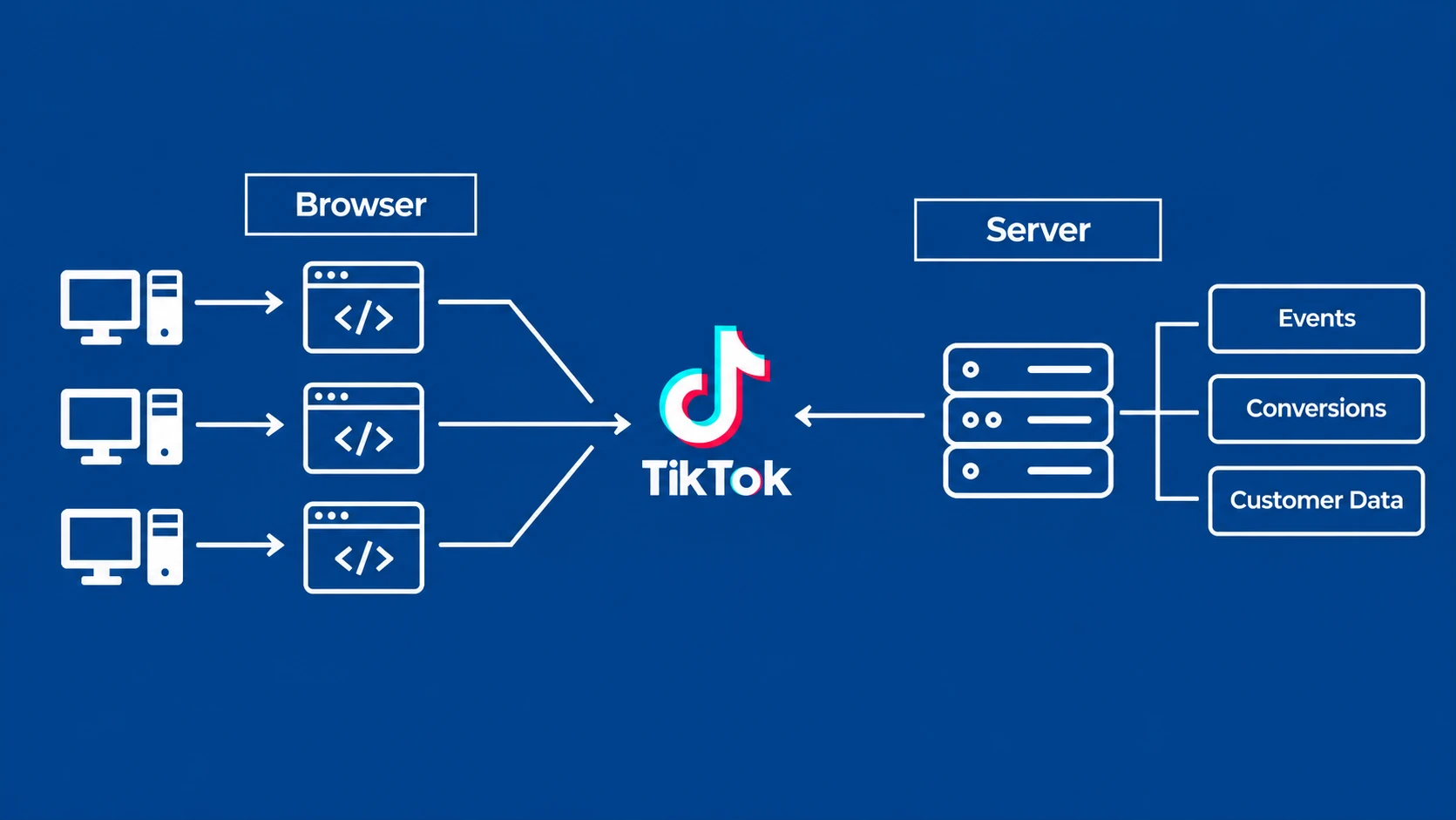
TikTok Ads optimisation depends on reliable conversion signals. Yet many PrestaShop stores still send those signals through the browser pixel alone. That setup was adequate when most users accepted cookies, browsers allowed third-party scripts to run freely, and mobile privacy controls were less restrictive. In 2026, it leaves meaningful gaps in reporting, audience building, and campaign optimisation.
The issue is not that the TikTok Pixel is obsolete. Browser-side tracking remains important because it captures on-page behaviour and supports matching in the customer’s session. The problem is relying on one delivery channel for every event. A stronger implementation sends the same conversion events through both the browser Pixel and TikTok Events API, then deduplicates them correctly.
What browser-only TikTok tracking does
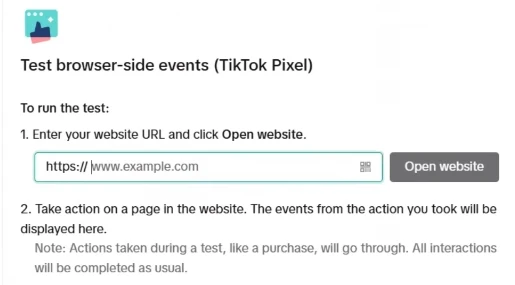
A browser pixel is JavaScript loaded on a shopper’s device. When a visitor views a product, adds it to cart, or completes checkout, the script sends an event to TikTok. For ecommerce, the most useful events are typically PageView, ViewContent, AddToCart, InitiateCheckout, and Purchase.
This approach has clear benefits. It can observe page context immediately, use first-party page data, and record interactions before a visitor identifies themselves. But the browser is not a controlled environment. The shopper’s device, app settings, consent choice, network, extensions, and browser policy can all prevent the request from reaching TikTok.
A pixel-only implementation therefore measures only the subset of conversions where the page loaded correctly, consent permitted tracking, the script was not blocked, and the shopper reached the confirmation page with the pixel still able to send data. That is not necessarily the same as the number of actual orders in PrestaShop.
Why pixel-only setups lose conversions in 2026

Ad blockers and browser tracking protection
Ad blockers increasingly recognise common pixel endpoints and tag patterns. Privacy-focused browsers and built-in tracking protections can also restrict client-side requests, storage, and script execution. A customer may finish a purchase successfully while the Purchase request never leaves the browser.
This is especially damaging at the bottom of the funnel. A missed purchase has more optimisation value than a missed page view, because TikTok uses conversion events to learn which users are likely to buy.
iOS ATT, consent and in-app browsing
Apple’s App Tracking Transparency (ATT) framework and platform policies limit the data available for advertising measurement when users do not grant permission. Consent requirements also determine whether marketing tracking may run in many jurisdictions. In-app browsers introduce another variable: redirects, checkout handoffs, and app-specific browser behaviour can interrupt client-side event delivery.
Server-side tracking does not override ATT, consent rules, or privacy law. It must be configured to respect the legal basis and consent state of each visitor. However, where tracking is permitted, server delivery reduces dependence on a browser successfully executing a third-party script at the precise moment an order completes.
Checkout and confirmation-page failures
A browser pixel usually records Purchase on the order-confirmation page. That page can fail to load fully, be closed quickly, be reached after a payment-provider return flow, or render without the expected order variables. Duplicate tags can create the opposite problem: multiple purchase events for one transaction.
These failures distort return on ad spend (ROAS), inflate or suppress conversion counts, and give TikTok lower-quality signals for bidding and retargeting.
Why browser and server events should work together
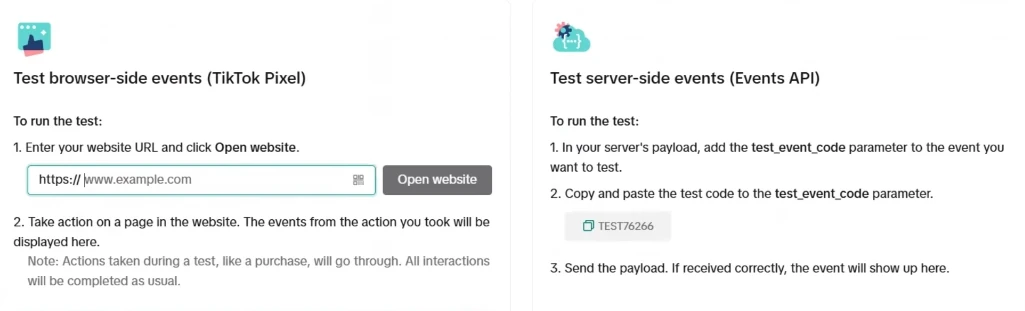
TikTok Events API sends events from your server to TikTok rather than solely from the shopper’s browser. For a PrestaShop store, the server has authoritative order and product data: order status, products, quantities, total value, and currency. It is less exposed to ad blockers and client-side page failures.
The best model is a dual setup combining Pixel and Events API. The browser Pixel captures real-time page interactions and browser context, while the server sends a corresponding event using reliable backend data. Both channels should provide consistent ecommerce parameters, including content_id, content_name, value, currency, and event_id.
The event_id parameter is essential for deduplication. When TikTok receives a browser event and a server event representing the same customer action, the identical event ID lets its deduplication process treat them as one conversion. Without a shared ID, sending both channels can double-count purchases and corrupt reporting.
How to diagnose it
Start by comparing PrestaShop orders with TikTok Purchase events for the same date range, timezone, and attribution settings. A gap does not prove every missing order was attributable to TikTok, but a large or inconsistent gap is a tracking warning.
Use TikTok Events Manager test tools to inspect event names, timestamps, parameters, and deduplication status. In browser developer tools, verify that ViewContent, AddToCart, InitiateCheckout, and Purchase requests fire once. Then test checkout on mobile Safari, an in-app browser, and a browser with a content blocker enabled.
Also check whether product IDs sent in content_id match the IDs used by your catalogue. Mismatched IDs weaken catalogue-based advertising and product-level reporting even when events appear to fire correctly.
How Pixel Track TikTok solves it
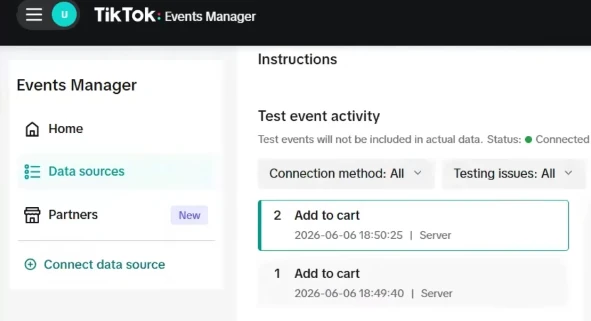
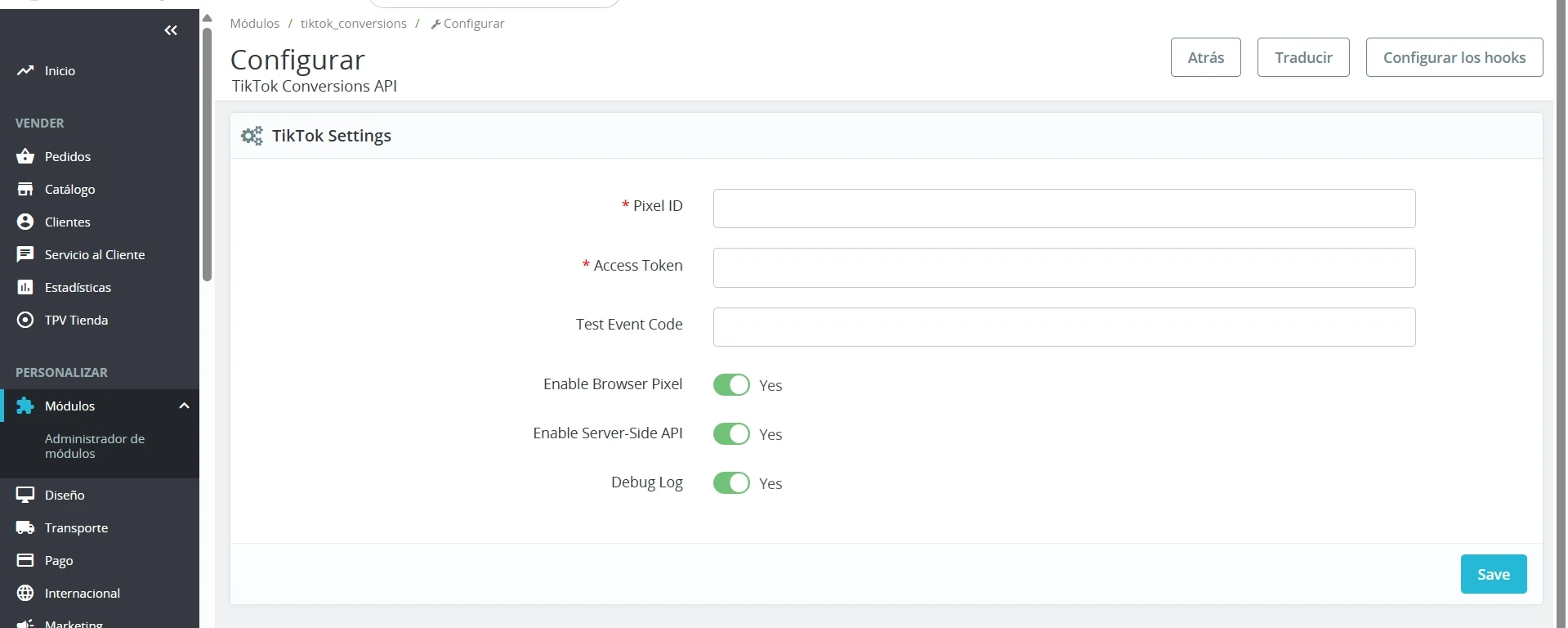
Pixel Track TikTok for PrestaShop implements both browser Pixel tracking and server-side TikTok Events API tracking in one coordinated setup. It sends PageView, ViewContent, AddToCart, InitiateCheckout, and Purchase events with essential ecommerce parameters such as content_id, content_name, value, currency, and event_id.
Most importantly, the module uses a shared, consistent event_id for matching browser and server versions of the same action. This enables TikTok deduplication while retaining the resilience of server-side delivery. Purchase data can be sent directly from the store’s order flow rather than depending only on a final browser page load.
For PrestaShop 1.7 through 8.2 stores, this provides a practical way to make TikTok measurement more complete without abandoning browser signals. Configure it alongside a valid consent strategy, verify events in Events Manager, and keep product identifiers consistent with your TikTok catalogue. The result is cleaner conversion data for reporting, retargeting, and campaign optimisation.