

What Is TikTok Event Match Quality (EMQ)?
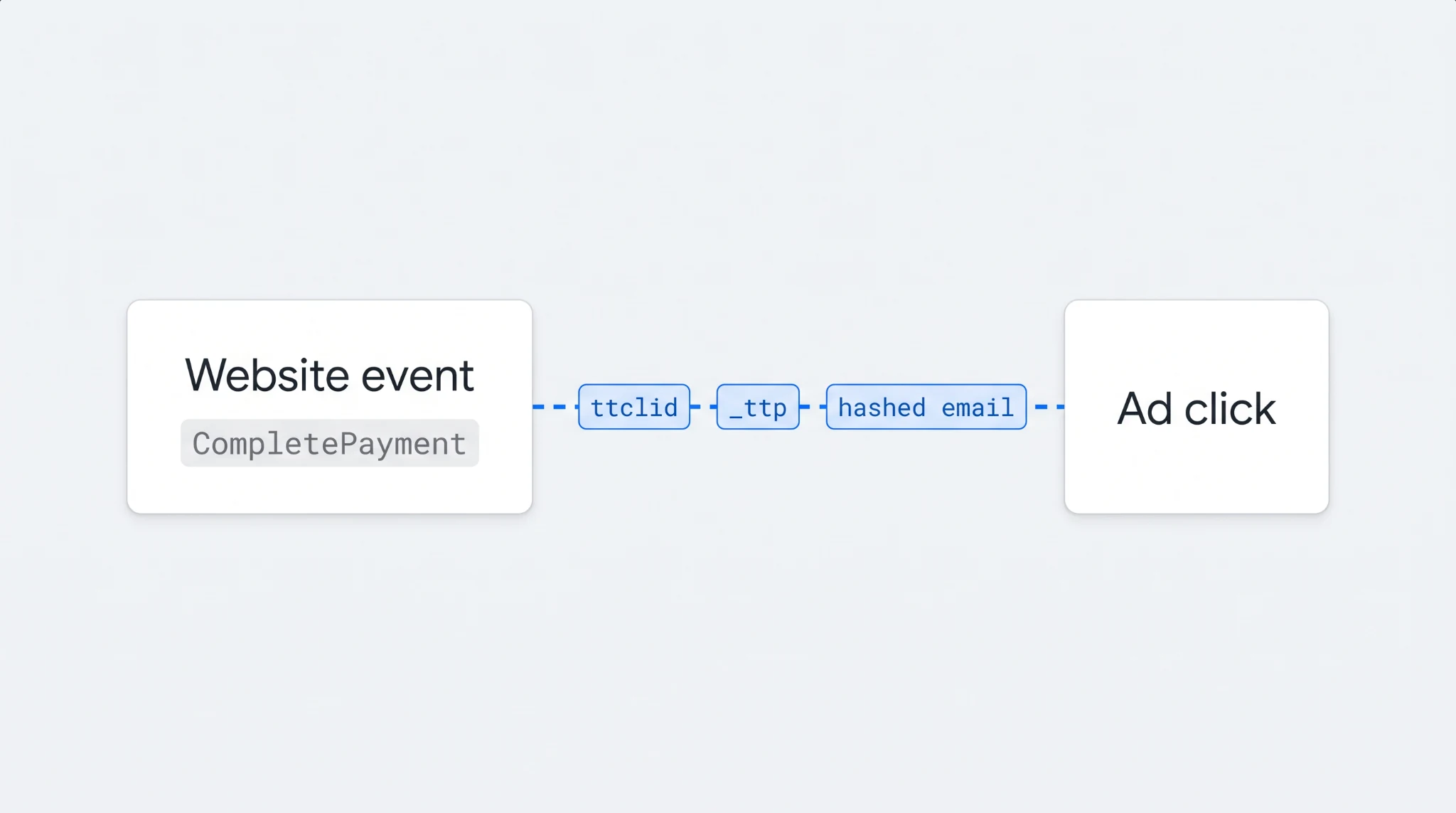
TikTok Event Match Quality (EMQ) is an Events Manager diagnostic that indicates how well TikTok can associate an incoming website event with a real TikTok user or ad interaction. It is not simply a pixel-health score. It reflects the usefulness of the identifiers and parameters attached to events such as product views, add-to-carts, checkouts, and purchases.
TikTok’s delivery system learns from conversion signals. To optimize a campaign toward Purchase, for example, it must reliably connect an ad impression or click to the eventual store checkout. Strong matching signals—including click identifiers, first-party browser identifiers, and properly formatted customer data—make that connection more likely. Weak signals leave TikTok with partial, delayed, or unattributable conversion data.
For ecommerce merchants, tiktok event match quality is therefore a measurement and bidding issue. A high-quality conversion event tells TikTok what happened, what product was involved, what it was worth, and—where permitted—which user or click session it belongs to. A low-quality event may still be received, but it provides materially less training value for attribution, retargeting, and Smart Performance Campaign optimization.
The Real-World Cost of Low EMQ
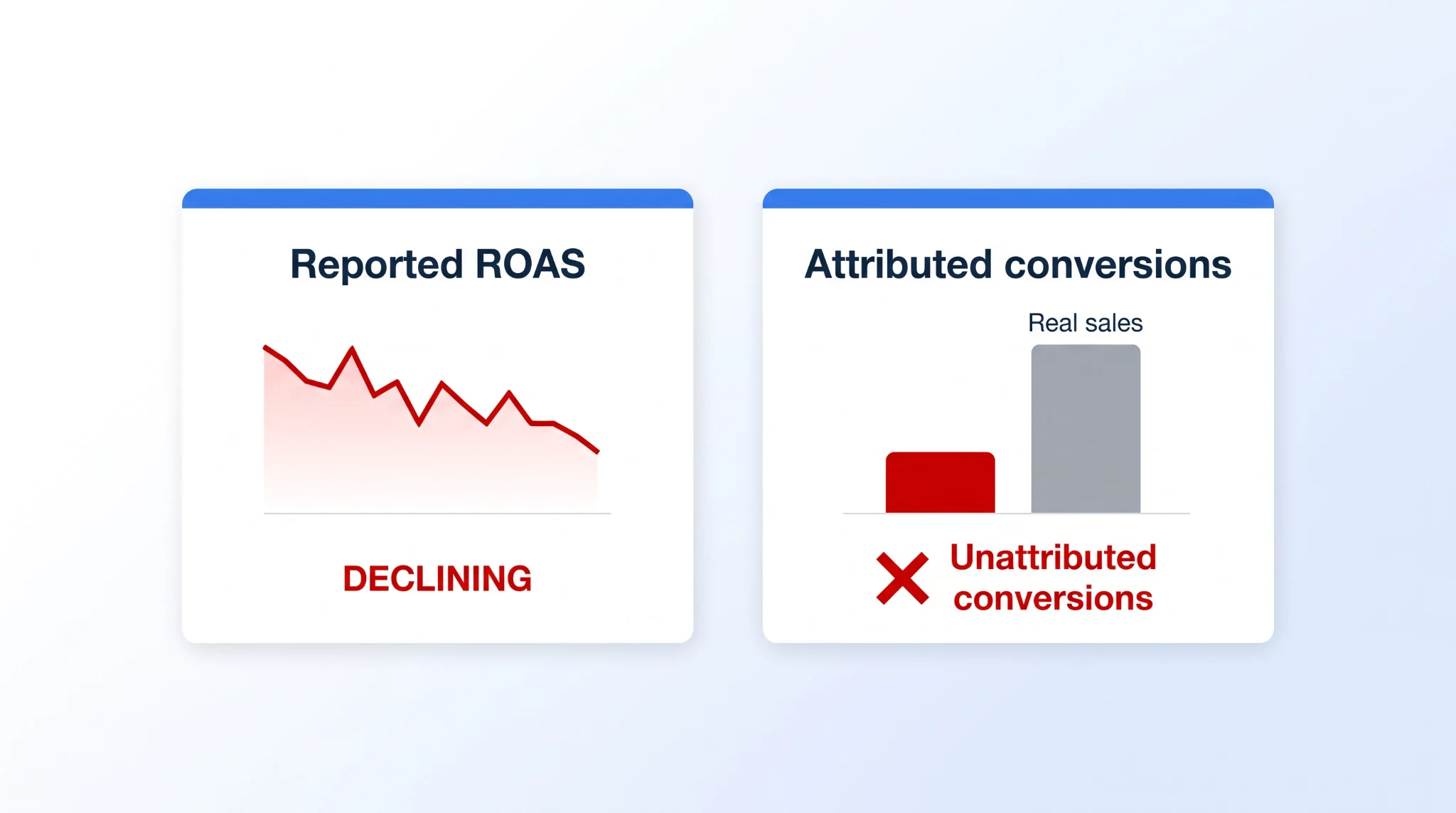
Low EMQ does not necessarily mean that sales have stopped. It means TikTok has less confidence when assigning those sales to campaigns and less usable data when searching for the next likely buyer.
As a result, the commercial consequences commonly include:
- Smaller website custom audiences. If browser and customer identifiers cannot be matched, fewer visitors and purchasers become available for audience creation and exclusion.
- Weaker lookalike seed quality. Lookalikes depend on accurately identified high-value users. Incomplete purchase signals create noisier seed populations.
- Inflated reported CPA and lower reported ROAS. Conversions that occurred but cannot be attributed may be absent from TikTok reporting, making efficient campaigns appear less efficient.
- Under-delivery. When an ad set has too few attributable optimization events, TikTok may struggle to exit learning or spend consistently against a conversion objective.
- Blinded smart bidding. Value optimization and conversion bidding require complete value, currency, product, and identity context. Missing fields reduce the algorithm’s ability to distinguish a high-intent visitor from a completed order.
This is why an EMQ project should not be treated as cosmetic score-chasing. The objective is durable, privacy-aware signal quality across the entire funnel.
The Anatomy of an Event Payload
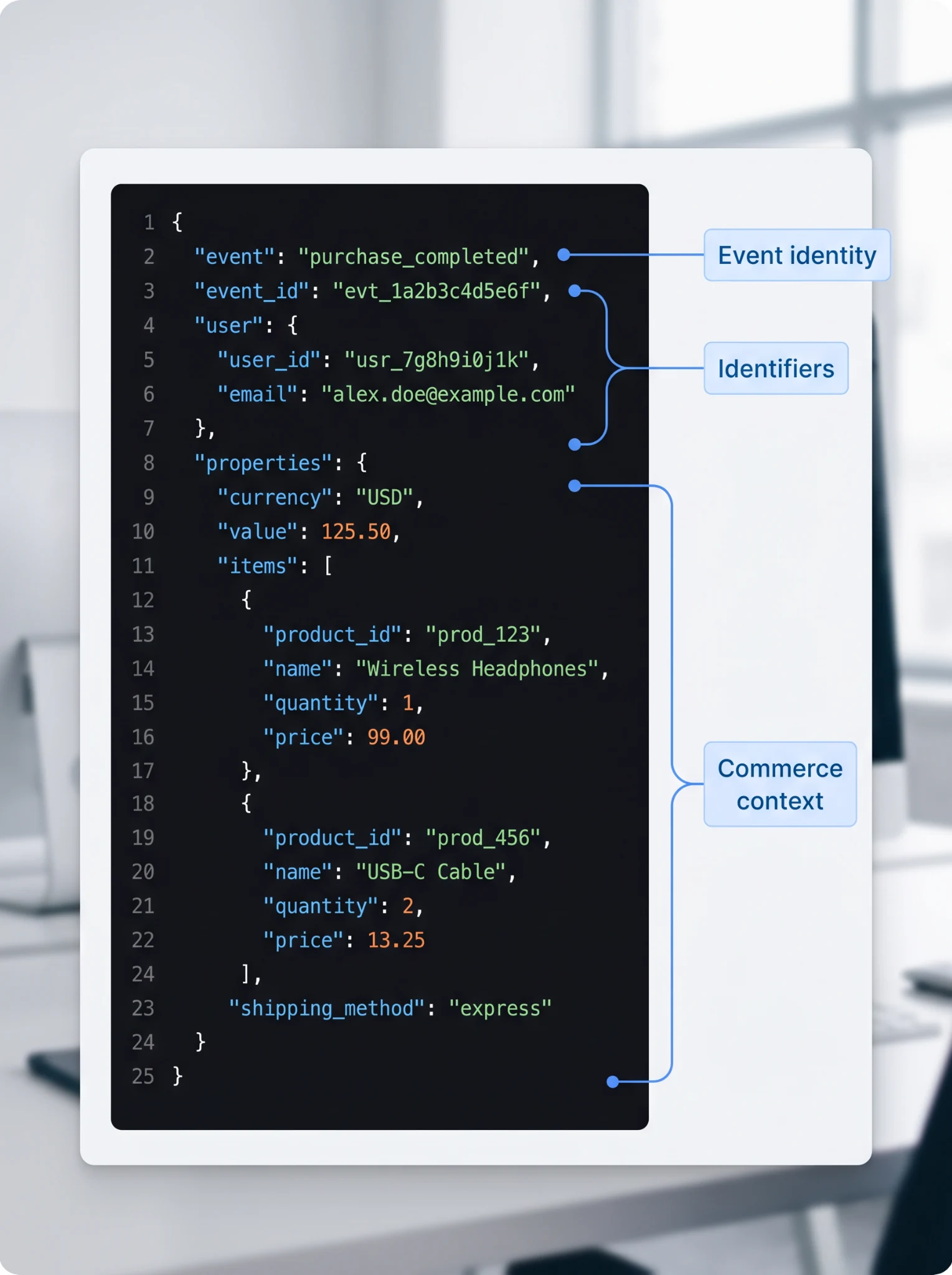
TikTok evaluates the event and the context surrounding it. Exact field availability can vary by TikTok integration and API version, but a robust ecommerce payload typically contains the following layers:
- Event identity: event name, event timestamp, and a unique event_id.
- Commerce context: content_id, content_name, quantity, value, and ISO 4217 currency.
- Browser and click identifiers: TikTok’s _ttp cookie and the TikTok click ID (ttclid) captured from landing-page URLs.
- Customer identifiers: normalized, SHA-256-hashed email address and phone number when available and permitted.
- Page context: page URL, referrer, and other request context needed to interpret the event.
A conceptual purchase payload looks like this:
```json
{
   "event": "CompletePayment",
   "event_time": 1735689600,
   "event_id": "ps-order-10482-9f3c",
   "context": {
   "page": { "url": "https://shop.example/confirmation" },
   "user": {
          "email": "sha256_normalized_email",
          "phone_number": "sha256_e164_phone",
          "ttclid": "captured_tiktok_click_id",
          "ttp": "first_party_ttp_cookie_value"
    }
  },
  "properties": {
  "content_id": "SKU-RED-42",
  "content_name": "Red Running Shoe",
  "value": 89.95,
  "currency": "USD"
  }
}
```
A PrestaShop order completion is often mapped to TikTok’s CompletePayment standard event, even where a merchant’s reporting language calls it “Purchase.” The important point is consistency: the browser event and server event must use the same event name, order value, product data, and event_id.
Core Failure Modes in Standard Ecommerce Setups
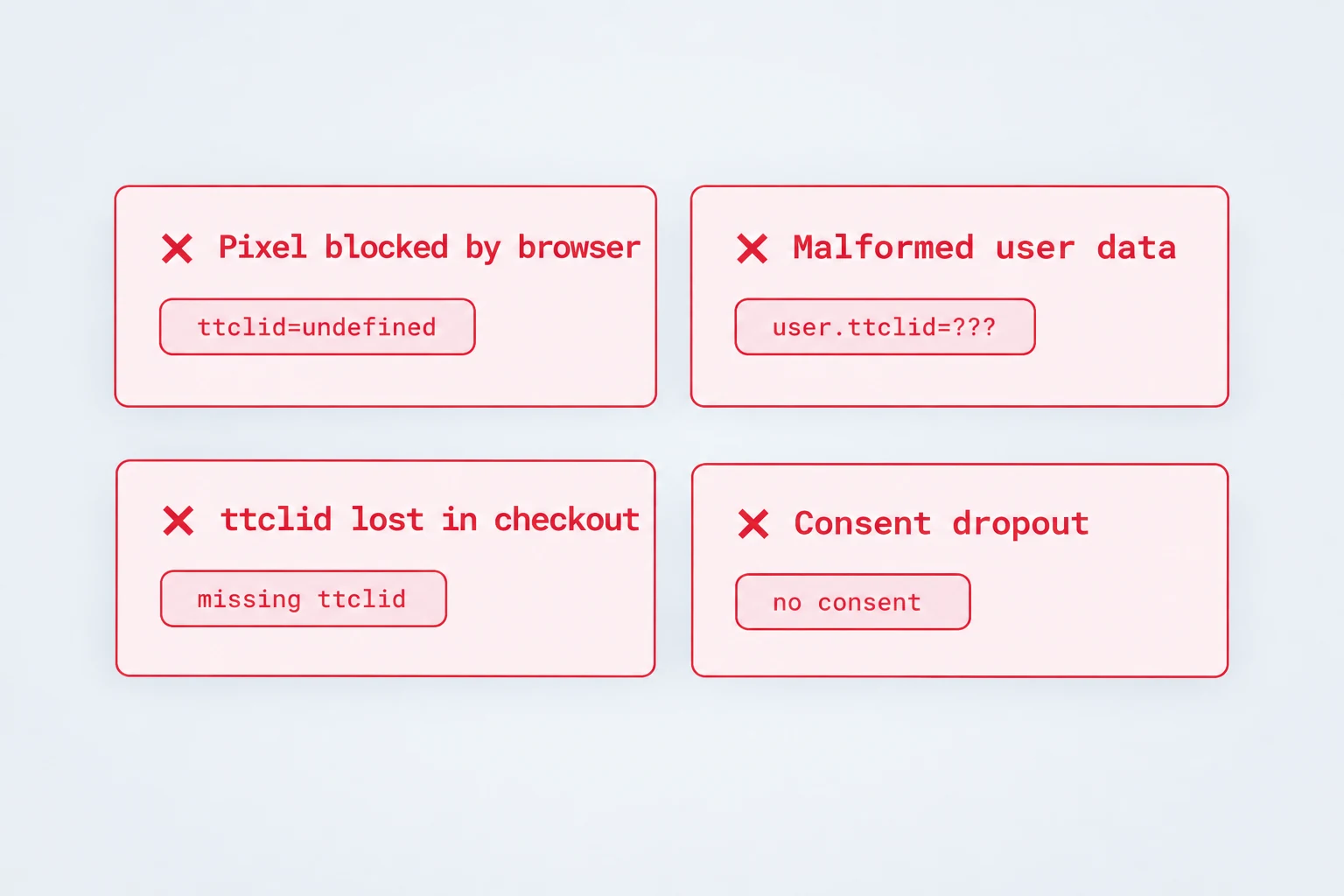
Pixel-only tracking blocked by browser privacy
A browser pixel is useful, but it is exposed to Safari ITP restrictions, Firefox privacy protections, network-level filtering, ad blockers, JavaScript failures, and interrupted thank-you-page loads. If the confirmation page never runs client-side code, the purchase may never reach TikTok. Server-side Events API tracking sends the event directly from the ecommerce application, reducing dependence on the browser alone.
Incomplete or malformed user parameters
A raw email is not the same as a matchable hashed email. Before SHA-256 hashing, values need consistent normalization: trim whitespace, lowercase emails, and convert phone numbers to a canonical international format (E.164). Hashing before normalization creates a different digest and prevents customer matching. Empty strings, placeholder numbers, and incorrectly named fields destroy match quality.
Missing ttclid propagation through checkout journeys
A `ttclid` (TikTok click ID) may arrive on a landing URL, but many stores lose it after internal navigation, payment redirects, or subdomain changes. When that click identifier is not persisted, the direct paid-click attribution model breaks before the highest-value event fires.
Consent-management dropouts
A consent banner can unintentionally suppress all measurement scripts, including events required for core conversion tracking. Conversely, sending personal data without explicit consent creates compliance and GDPR risk. A sound architecture applies consent choices consistently across both browser and server processing rather than using server-side tracking to bypass privacy rules.
Architectural Deep Dives / Subtopic Map
EMQ improvement has three technical foundations that deserve implementation-level attention:
- Normalize identifiers before hashing, choose valid source values, and avoid formatting mistakes in SHA-256 hashed user parameters in TikTok Events API.
- Retain the TikTok click ID (ttclid) from landing page through checkout and manage _ttp continuity with first-party ttclid cookie tracking.
- Align server calls with consent states, GDPR obligations, and data-minimization rules through a TikTok Events API consent mode integration.
Together, these controls address the major causes of signal loss without assuming that one identifier alone will always be available.
The Dual-Tracking Standard: Browser + Events API + Shared `event_id`
The strongest practical pattern is dual delivery: send a browser Pixel event for immediate client-side context and send a corresponding server-side Events API event from PrestaShop’s authoritative transaction flow.
Dual delivery is not duplicate counting when deduplication is implemented correctly. Generate one stable event_id for the business event, then pass that identical value to both channels. TikTok can recognize the two records as representations of the same action while retaining the complementary matching signals from each source.
For example, an AddToCart event can be triggered in the browser at the interaction point, while the server confirms the cart mutation. A Purchase/CompletePayment event can receive browser context on the confirmation page and server confirmation after PrestaShop creates the order. The shared identifier must be deterministic enough to survive retries but unique enough not to merge separate actions. For orders, a pattern such as ps-order-{order_id}-{stable_suffix} is preferable to a timestamp generated independently in each channel.
Use the same discipline across the entire funnel: Pageview, ViewContent, AddToCart, InitiateCheckout, and Purchase (or TikTok’s CompletePayment mapping). Every event should carry accurate product and monetary parameters where relevant, not only the final purchase.
How Pixel Track TikTok Solves EMQ on PrestaShop
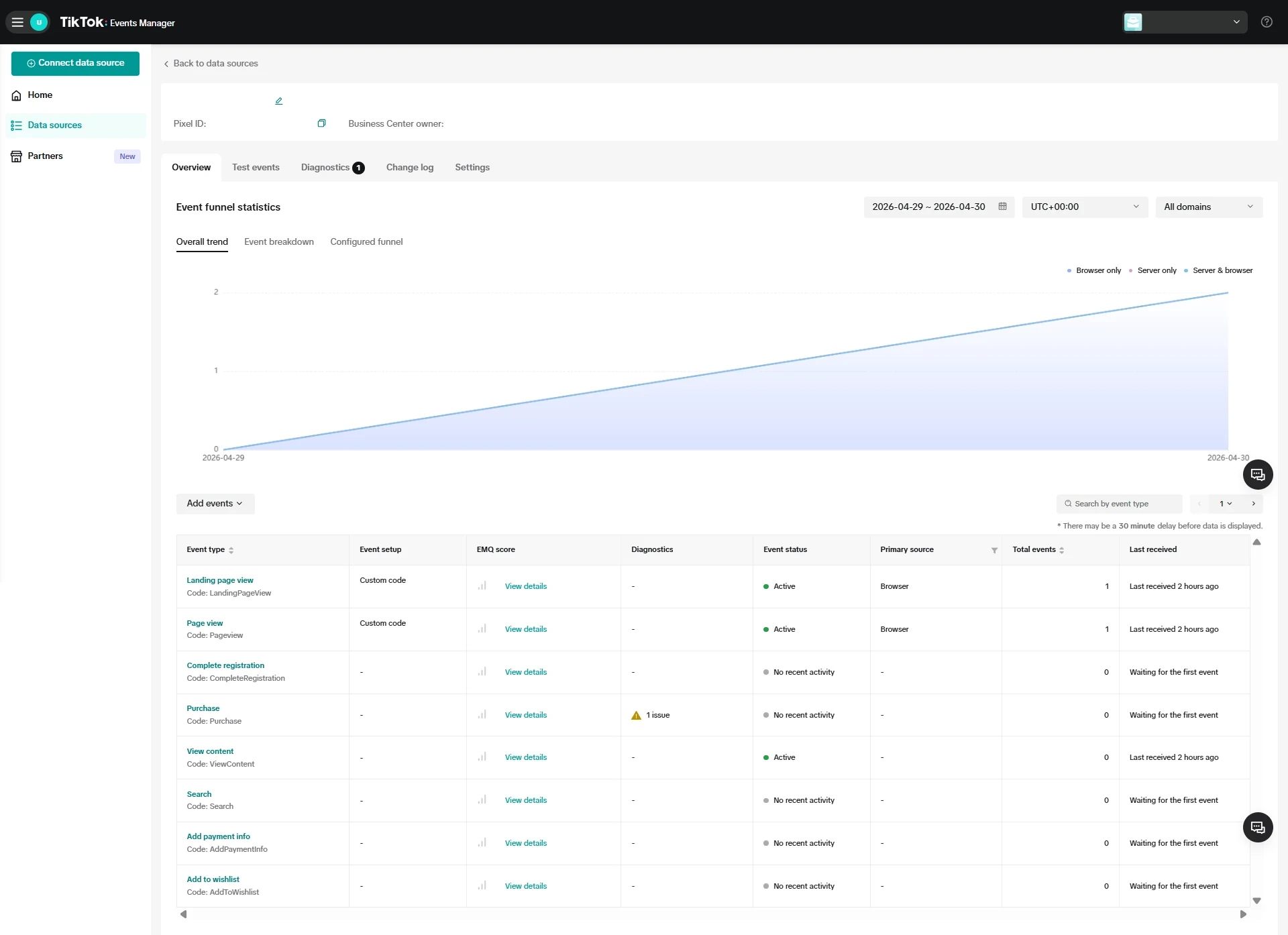
Pixel Track TikTok is built for PrestaShop 1.7, 8.0, 8.1, and 8.2 stores that need a consistent browser-and-server tracking architecture rather than disconnected scripts.
The module delivers the five core funnel events—Pageview, ViewContent, AddToCart, InitiateCheckout, and Purchase—with full ecommerce parameters including content_id, content_name, value, currency, and event_id. It automatically normalizes and SHA-256 hashes available customer email and phone data, helping ensure identifiers are formatted correctly before they reach the Events API.
It also retains session-level TikTok attribution context, including ttclid and _ttp tokens, so click and browser identifiers remain available throughout the PrestaShop checkout. On the server side, payload enrichment combines authoritative order data with eligible session parameters. Strict event_id pairing keeps browser Pixel and Events API records aligned for accurate TikTok deduplication.
Finally, consent handling should be deliberate. Pixel Track TikTok respects merchant consent flags so configured privacy choices govern tracking, ensuring server-side event delivery is not lost merely because a browser-side script failed. Merchants should configure this behavior to match their consent-management platform, privacy notices, regional obligations, and legal guidance.