

TikTok Ads optimization depends on a reliable stream of conversion events. When a shopper views a product, adds it to cart, starts checkout, or completes a purchase, the TikTok Pixel should report what happened and attribute the order to the correct campaign. Privacy changes have made this browser-based tracking process materially less dependable.
For PrestaShop merchants, the result is familiar: TikTok Ads reports fewer purchases than the store actually records, attribution windows appear inconsistent, audiences shrink, and automated bidding strategies run on incomplete data. iOS App Tracking Transparency (ATT), cookie-consent choices, and GDPR requirements each affect the signal path differently—but together they create substantial conversion measurement gaps.
Why browser pixel tracking loses conversion data
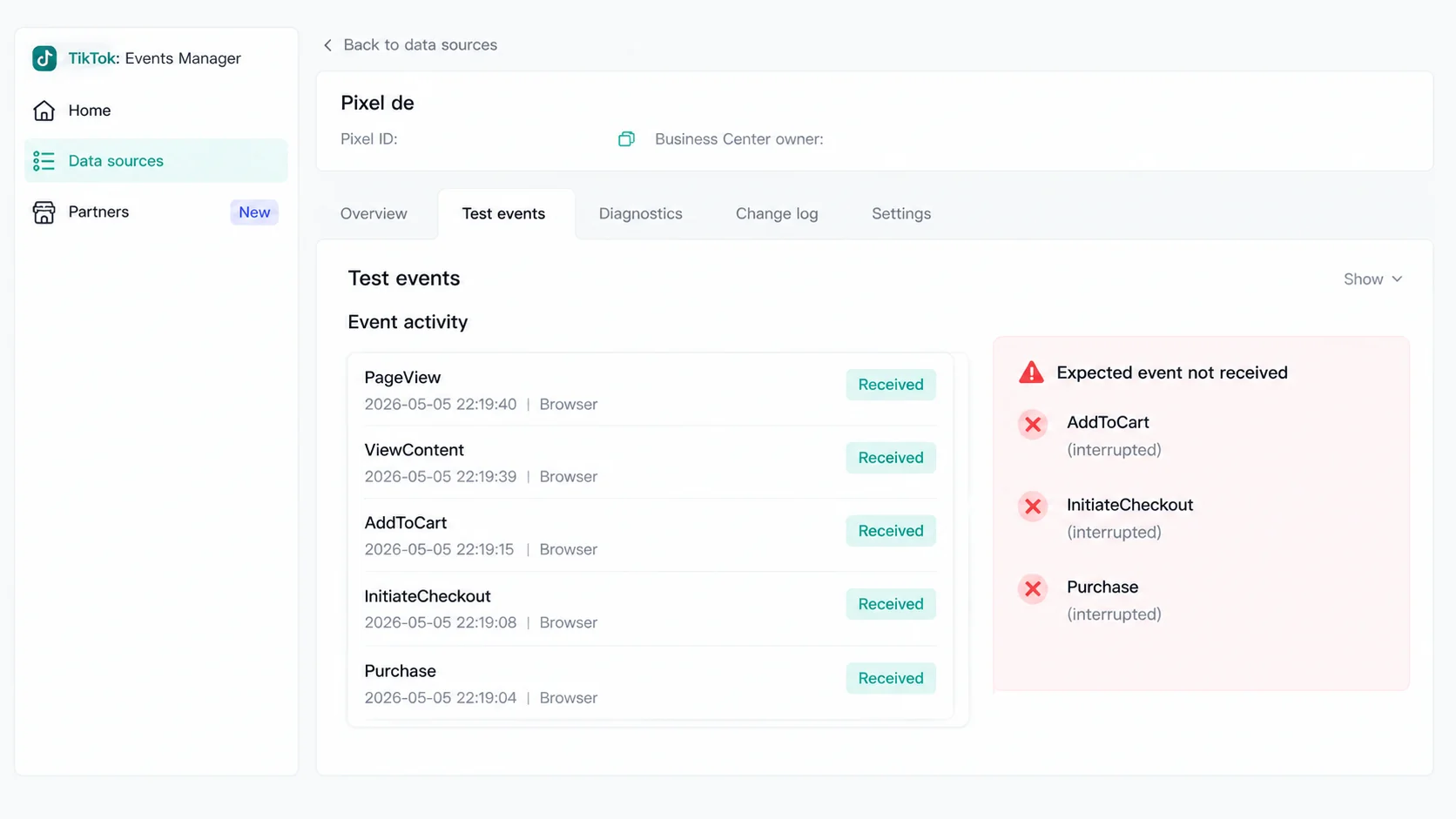
A traditional TikTok Pixel relies on JavaScript running directly in the visitor’s browser. It captures PageView, ViewContent, AddToCart, InitiateCheckout, and Purchase events and dispatches them straight from the client device to TikTok. While straightforward, this architecture depends entirely on uninterrupted browser execution, unblocked network requests, client-side storage, and accessible identifiers.
Any interruption along that execution chain prevents TikTok from receiving the conversion payload or strips the identifiers needed to match the event to a TikTok user. The transaction remains fully recorded inside PrestaShop; TikTok simply receives an incomplete or missing attribution signal.
iOS ATT reduces app-based identity and attribution

Apple’s ATT framework requires iOS users to grant permission before apps can access the Identifier for Advertisers (IDFA) for cross-app tracking. Many users decline. While a website pixel is not identical to an in-app SDK, ATT has contributed to a broader privacy environment in which deterministic mobile attribution is harder and identifiers are less available.
TikTok can still receive web events from an iPhone browser when permitted, but it may have fewer signals to connect that event to a TikTok ad interaction. Attribution becomes more modeled, delayed, or undercounted—particularly when users move between the TikTok app and a mobile browser before buying.
Cookie consent changes whether the pixel can run

Consent management platforms often classify advertising pixels as marketing or targeting technologies. If a visitor rejects marketing cookies, a correctly configured consent banner should prevent the browser TikTok Pixel from loading or sending marketing events.
This is not a tracking bug. It is the intended result of the visitor’s choice. However, it means campaign reporting will represent only the consented portion of traffic. Problems arise when a banner blocks the base pixel but not purchase code, fires tags before consent, or applies different rules across product, cart, and checkout pages. These inconsistent implementations create both compliance risk and unreliable funnel reporting.
GDPR limits personal-data processing, not just cookies
Under GDPR and similar privacy laws, advertisers need an appropriate legal basis for processing personal data for advertising measurement. Depending on the market, setup, and use case, consent may be required before sending advertising-related data to TikTok. IP addresses, cookie IDs, click IDs, hashed contact data, and event-level purchase details can all be relevant to that assessment.
A server-side implementation is not a GDPR exemption. Moving an event from the browser to the server does not remove the need for a lawful basis, transparent privacy notices, consent records where required, retention controls, or a suitable TikTok data-processing arrangement. It does, however, reduce technical loss after the store has determined that an event may be sent.
The practical impact on TikTok Ads performance
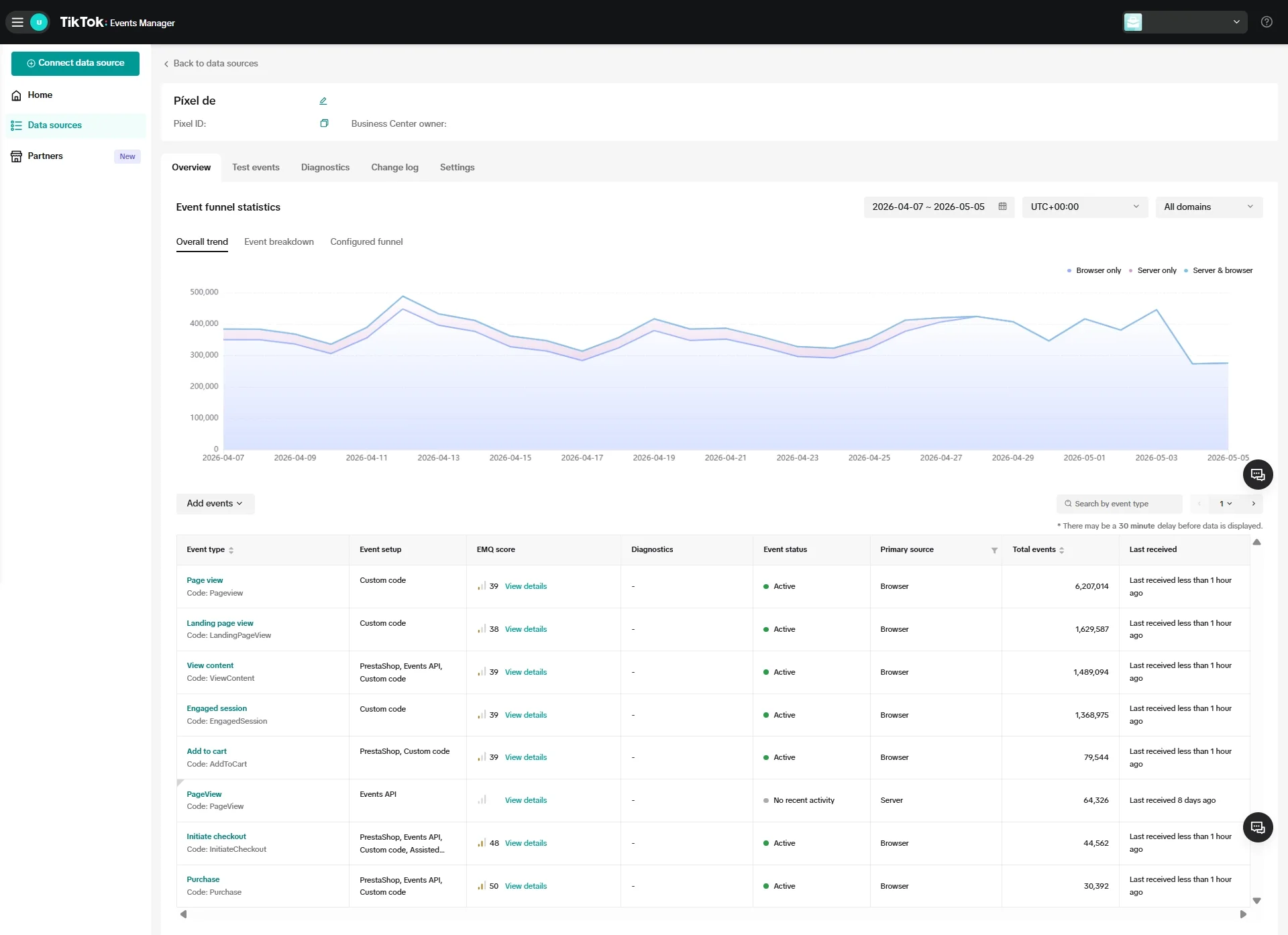
Missing lower-funnel events affect more than dashboard totals. TikTok’s delivery system uses conversion feedback to identify users likely to buy. If Purchase events are absent or contain incomplete product and revenue data, optimization has less accurate training data. Retargeting audiences based on product views or cart activity may also be smaller than expected.
A common mistake is comparing TikTok’s attributed purchases directly with all PrestaShop orders. Attribution reporting answers a narrower question: which orders TikTok can observe and credit under its attribution rules. The gap should be investigated, not automatically treated as proof that advertising failed.
How to diagnose it

Start by mapping each event across the customer journey: PageView, ViewContent, AddToCart, InitiateCheckout, and Purchase. Use TikTok Events Manager and browser debugging tools to confirm that each browser event fires once, on the correct page, with content_id, content_name, value, and currency.
Then test consent states separately. Compare an accepted-marketing session with a rejected session and document which events are intentionally suppressed. Segment results by iOS versus Android, browser, country, and checkout method. Finally, reconcile PrestaShop paid orders against TikTok Purchase events by date, currency, order value, and event timestamp. Large drop-offs after checkout often point to browser interruptions, redirect flows, ad blockers, or thank-you-page tracking failures.
How Pixel Track TikTok solves it
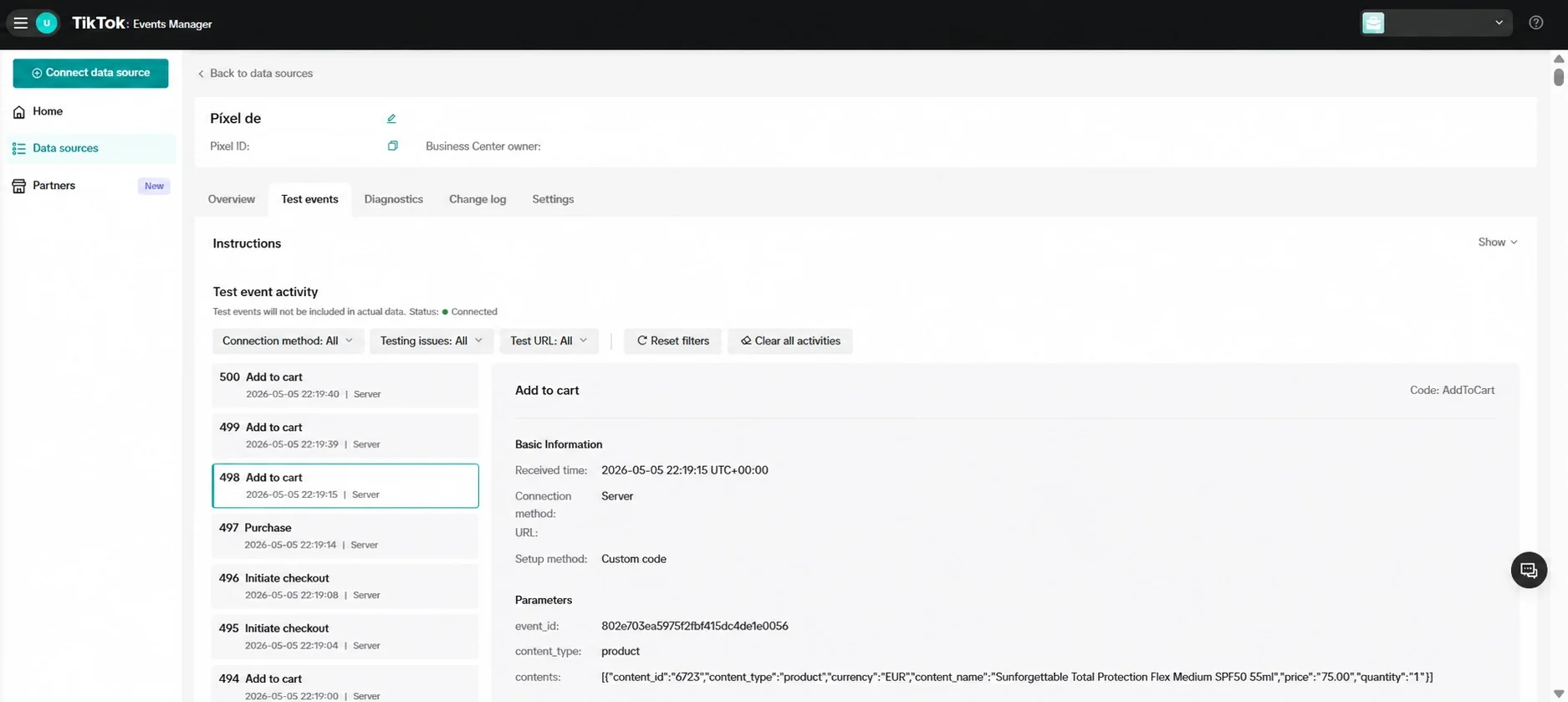
Pixel Track TikTok combines the browser TikTok Pixel with TikTok Events API server-side delivery for PrestaShop 1.7 through 8.2. The browser pixel continues to support client-side measurement where it is available, while the server sends the same core commerce events from a more resilient environment.
It tracks PageView, ViewContent, AddToCart, InitiateCheckout, and Purchase with complete ecommerce parameters, including content_id, content_name, value, currency, and event_id. Crucially, the browser and server versions of the same event share a consistent event_id. TikTok can use that ID to deduplicate matching events, preventing one customer action from being counted twice while preserving a stronger signal when one delivery path fails.
The module does not bypass consent requirements. Instead, it gives merchants a technically robust foundation to send permitted events consistently after their consent and privacy configuration has been applied. With reliable event payloads, server-side resilience, and correct deduplication, PrestaShop teams can measure TikTok campaigns more accurately and give optimization systems better conversion feedback.